

Our Hearts Broken Open
The Practice of Forgiveness

Do you ever put “buts” in your apologies?
Dr. Harriet Lerner once called this out brilliantly on Brené Brown’s podcast:
So once you say, “I’m sorry, but…,” it doesn’t matter if what you say after the “but” is true, it will cancel out your apology. So, drop the “but.”
Ever since hearing this admonition, I’ve been trying to catch my own “buts” before they slip out. It’s harder than you think. But when I manage it — especially with my kids — a simple, unqualified “I’m sorry” defuses tension instantly. It’s cleaner. Clearer. Weightier.
As hard as it may be to apologize well, I have always felt like forgiveness is way harder. Forgiveness asks more of us. It requires healing that sometimes even the best apology can’t seem to reach.

The Science of Forgiveness
Through friends at the Global Forgiveness Movement at the Harvard Human Flourishing Program, I recently learned about Everett Worthington, one of the world’s leading researchers on forgiveness. Worthington has spent decades studying how forgiveness can heal not just minds, but bodies and communities.
Worthington’s most influential contribution, the REACH Forgiveness Model, offers a practical path toward emotional release:
R – Recall the hurt
E – Empathize with the offender
A – Offer an altruistic gift of forgiveness
C – Commit to forgive
H – Hold onto forgiveness
Across more than 25 randomized controlled trials, this model has been shown to reduce anxiety, depression, and stress while improving overall well-being. Forgiveness, it turns out, isn’t just a moral or spiritual act — it’s a psychological and physiological one.
When we forgive, we not only loosen the hold of anger and bitterness that weighs down our minds and bodies, but we also make space for healing and peace. Forgiveness quiets the rumination that keeps wounds open and restores balance to our emotional lives. Letting go of resentment reduces stress hormones like cortisol, which in turn lowers risk for cardiovascular disease, chronic pain, and depression.
Worthington’s research has even reached war-torn and conflict-affected regions. In a 2024 BMJ Public Health study, nearly 5,000 participants from five countries practiced self-guided forgiveness exercises for just three hours — and still experienced measurable reductions in anxiety and depression.
Practicing Forgiveness
I was intrigued. So when I found myself stuck on the tarmac for a work trip, I decided to try the forgiveness workbook that the Harvard team had created.
I focused my work on a hurt I had been carrying quietly for years. As I made my way through each exercise, I noticed that the edges of resentment were softened. What replaced it wasn’t absolution but compassion.
It surprised me how freeing it felt. The process didn’t erase the hurt, but it transformed my relationship to it. Forgiveness didn’t excuse the past; it began to untether me from it.
This unfettering reminded me of how one of my personal heroes, Scarlett Lewis, demonstrates compassion in action. Scarlett lost her six year-old son Jesse during the mass shooting at Sandy Hook Elementary School in 2012.

She suffered unfathomable loss, and yet today, if you have the good fortune to meet her, you will see that she is the embodiment of human flourishing.
What she models is not happiness in spite of tragedy, but the active, virtuous transformation of suffering into meaning.
For Aristotle, eudaimonia, or flourishing, was never about happiness, ease, or the avoidance of pain. It was about living in accordance with virtue — realizing our highest capacities through reason, courage, and compassion — even in the midst of hardship.
When Scarlett learned that her son had been murdered at Sandy Hook Elementary School, her first thought was not vengeance but compassion. She later explained, “I was thinking about how someone could do something so heinous — and what must have happened to him to drive him to do that.”
That moment of moral clarity — compassion emerging from devastation — is the very “activity of the soul in accordance with virtue” that Aristotle described.
Just days later, when Scarlett stood to give her son’s eulogy, she asked everyone in the audience to take one hateful thought and turn it into a loving one instead. And that invitation became her life’s work.
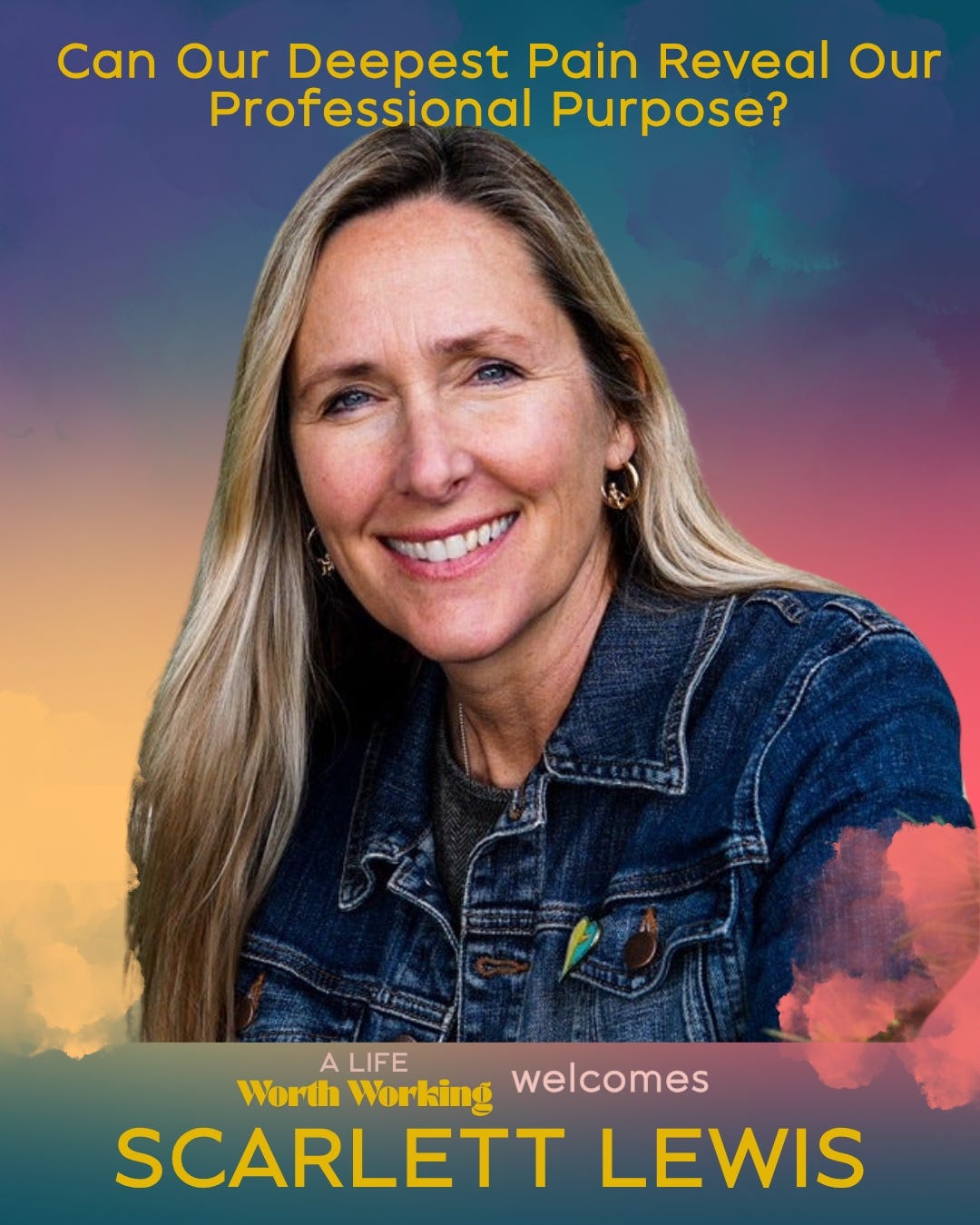
Through the Jesse Lewis Choose Love Movement, Scarlett has transformed grief into a global project of service, helping children cultivate the virtues Aristotle said make life worth living: courage, gratitude, forgiveness, and compassion in action. Today, Choose Love reaches more than 16,000 schools across all 50 states and 135 countries.
Scarlett’s flourishing is not serenity or escape from suffering — it is moral strength in motion, the daily exercise of love and courage in the face of loss. She flourishes not because she is free from pain, but because she has learned to act boldly and wisely within it.
Forgiveness Unlocks Flourishing
There is no way to be human without having one’s heart broken. But there are at least two ways for the heart to break.... The heart can be broken into a thousand shards, sharp-edged fragments that sometimes become shrapnel aimed at the source of our pain.... But there is another way to visualize what a broken heart might mean. Imagine that small, clenched fist of a heart “broken open” into largeness of life, into greater capacity to hold one’s own and the world’s pain and joy.... heartbreak can become a source of compassion and grace because we have seen it happen with our own eyes as people enlarge their capacity for empathy and their ability to attend to the suffering of others. Transforming heartbreak into new life is the aim.
— Parker Palmer, “The Broken-Open Heart: Living With Faith and Hope in the Tragic Gap”
Scarlett’s story reveals what forgiveness makes possible. Forgiveness doesn’t deny injustice or minimize loss; it releases us from being hemmed in by hate, revenge, and bitterness.
“Pain has a purpose,” Scarlett explains. “It’s there to help us grow.” Heartbreak can deepen empathy and strengthen our connection to others’ suffering. The goal isn’t to return to wholeness as before, but to reach into a new kind of wholeness — one that is wiser, more spacious, and more attuned to the human condition.
Forgiveness can serve as a bridge between suffering and flourishing. To forgive is to choose meaning over bitterness. When we practice forgiveness as Scarlett Lewis has, we build habits of courage and compassion to keep our hearts wide open even in the midst of unthinkable pain.
Have you subscribed to your new favorite podcast, A Life Worth Working? It’s on nearly every podcast platform out there. Season TWO has begun, and you’re not going to want to miss these episodes.
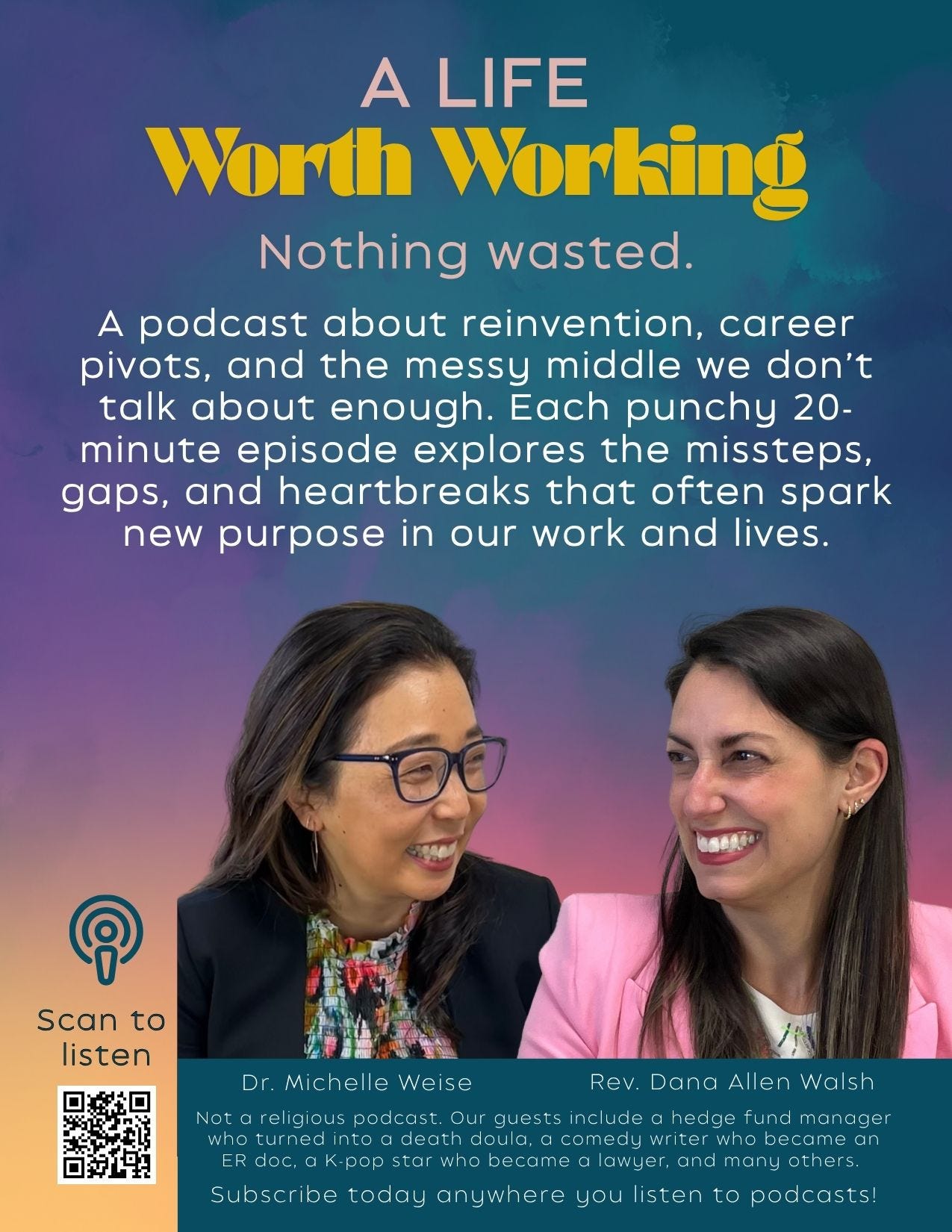
Dr. Michelle Weise is the chief impact officer of the Kern Family Foundation and author of Long Life Learning: Preparing for Jobs that Don’t Even Exist Yet. She is also the co-host of the podcast, “A Life Worth Working,” available wherever you listen to podcasts. All thoughts and opinions expressed are solely my own and do not express the views or opinions of my employer.